Road-marking paint has a hard job: it must stay bright, visible and intact under constant traffic, sunlight and weather. Achieving that durability and night-time visibility comes down to a specific set of raw materials. This guide explains what goes into road-marking systems and why each component matters.
Two main road-marking systems
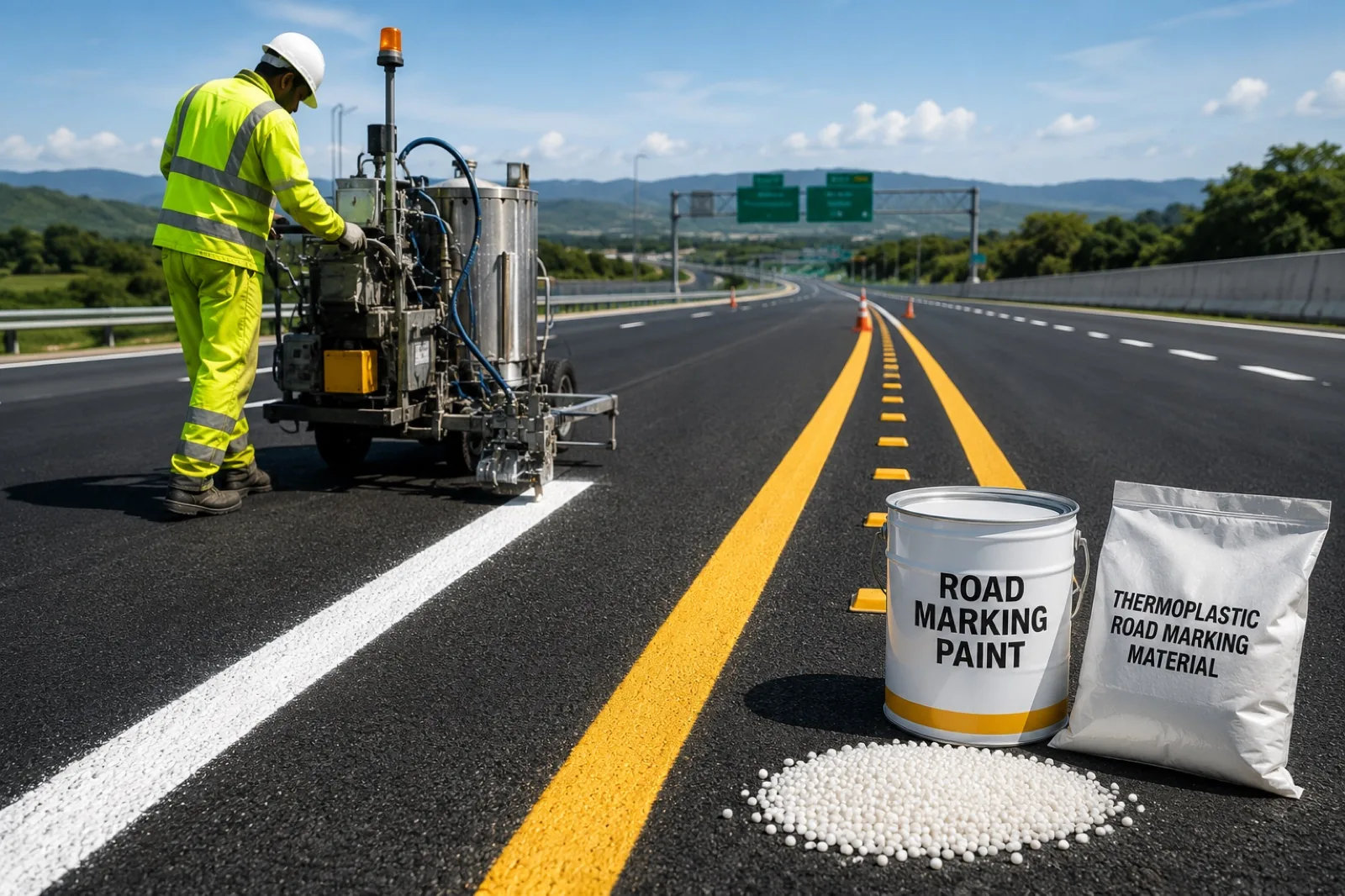
- Thermoplastic road marking — applied hot, it melts and bonds to the road, then solidifies into a thick, durable line. Built around hydrocarbon resin, fillers, pigments and glass beads.
- Solvent-based / cold-applied paint — a conventional paint formulation applied cold, used where thermoplastic is not practical.
The key raw materials
C5 hydrocarbon resin — the binder
The heart of a thermoplastic road-marking formulation is C5 hydrocarbon resin. It acts as the binder that holds pigments, fillers and glass beads together and bonds the marking to the road surface. Its softening point and colour directly affect durability and brightness, which is why the correct grade matters.
Glass beads — the retroreflectivity
Glass beads are what make road markings glow in your headlights at night. Embedded in and sprayed onto the marking, they retroreflect light back toward the driver. They are essential for night-time and wet-weather visibility.
Pigments — colour and visibility
- Titanium dioxide (TiO₂) for bright, opaque white lines
- Chrome yellow / chrome pigments for high-visibility yellow markings
- Other pigments for coloured markings and zones
Fillers and additives
Extenders and fillers build body and control cost, while additives fine-tune flow, adhesion and durability under traffic.
Why grade selection matters
Road markings fail when the wrong grade is used — resin that softens in heat, pigments that fade, or beads with poor retroreflectivity. Because these products face extreme wear, sourcing the correct, consistent grades from a reliable supplier is critical to a marking that lasts.
Aleemsons supplies road-marking raw materials — C5 hydrocarbon resin, glass beads, titanium dioxide and chrome pigments — as part of our broader coatings and inks range.
Producing road-marking paint? Contact our team with your specification and volumes, and we will revert with the right grades, pricing and availability.
Source these materials with confidence
Aleemsons supplies the raw materials in this article, with technical data sheets on request.