Hydrocarbon resins are one of the most versatile families of raw materials in industry — quietly improving the tack of an adhesive, the strength of a rubber compound, and the gloss and adhesion of a paint. Two of the most important types are C9 hydrocarbon resins and their upgraded cousins, hydrogenated resins. This guide explains what they do and how to choose between them.
What are hydrocarbon resins?
Hydrocarbon resins are low-molecular-weight thermoplastic resins made from petroleum by-products. They are not usually the main binder — instead they are performance modifiers that boost tack, adhesion, hardness, gloss and compatibility in a formulation. They are classified mainly by the feedstock they come from:
- C5 (aliphatic) resins — excellent tack, softer, widely used in adhesives
- C9 (aromatic) resins — harder, higher softening point, good for paints, inks and rubber
- C5/C9 (copolymer) resins — a balance of both
- Hydrogenated resins — any of the above, further processed to remove colour and improve stability
C9 hydrocarbon resins
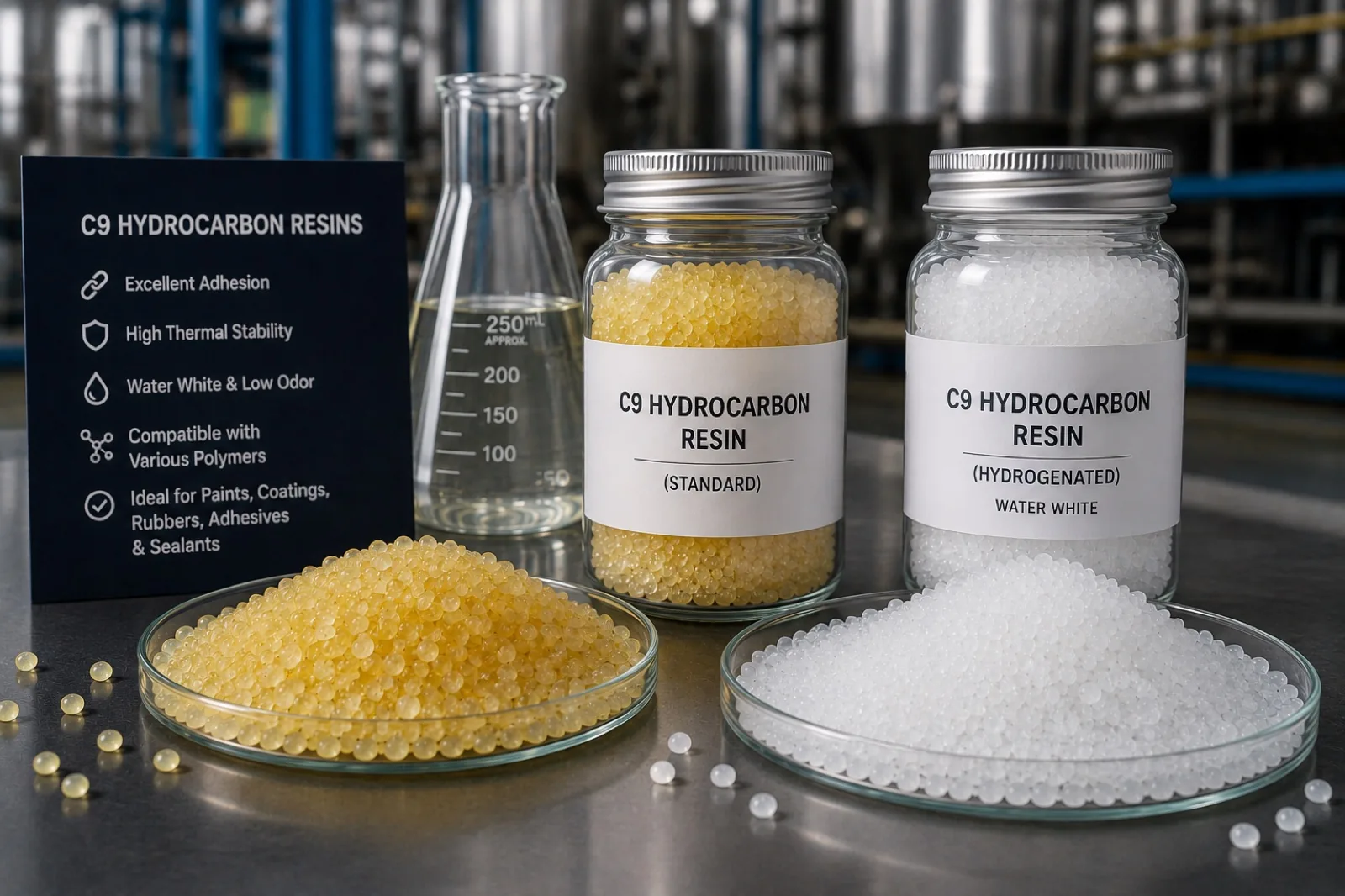
C9 hydrocarbon resin is an aromatic resin prized for its hardness, higher softening point and strong adhesion. Typical uses:
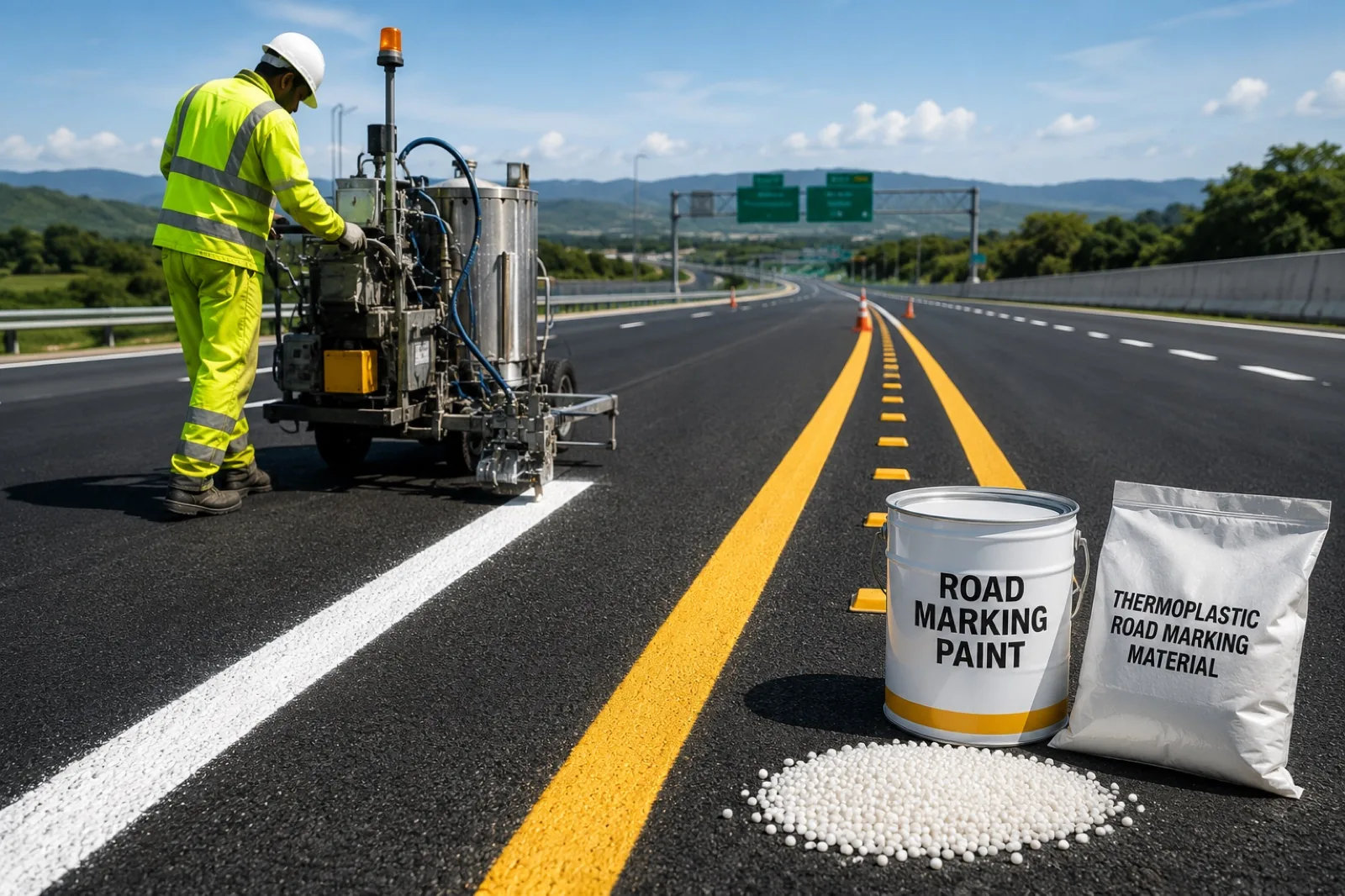
- Paints & coatings — improves adhesion, hardness, gloss and water resistance; used in road marking and industrial paints
- Printing inks — adds gloss, pigment wetting and film hardness
- Rubber & tyres — acts as a tackifier and reinforcing/processing aid in rubber compounds
- Adhesives — provides cohesive strength and heat resistance
Its aromatic nature makes it compatible with many binders while adding body and durability.
Hydrogenated hydrocarbon resins
Hydrogenation takes a standard C5 or C9 resin and chemically treats it with hydrogen to remove unsaturation. The result is a cleaner, lighter, more stable resin with real advantages:
- Water-white to light colour — essential where appearance matters (clear adhesives, light-coloured coatings)
- Excellent thermal and UV stability — resists yellowing and degradation
- Low odour
- Better compatibility in demanding, high-clarity systems
Hydrogenated resins cost more than standard grades, but they are the right choice for hot-melt adhesives, hygiene products, light-coloured coatings and any application where colour and stability are critical.
C9 vs. hydrogenated — how to choose
- Need maximum hardness, adhesion and value in a paint, ink or rubber compound? A C9 resin is usually ideal.
- Need light colour, clarity and long-term stability in an adhesive or premium coating? A hydrogenated resin earns its higher price.
- Need soft tack for a pressure-sensitive adhesive? A C5 resin may suit better.
The right choice depends on your softening point, colour and compatibility requirements — which is where technical support from your supplier matters.
Applications at a glance
- Paints & coatings — adhesion, hardness, gloss, water resistance
- Printing inks — gloss, pigment wetting, hardness
- Adhesives (hot-melt, pressure-sensitive) — tack and cohesive strength
- Rubber & tyres — tackifier and processing aid
Explore our product pages for C9 Hydrocarbon Resin, C5 Hydrocarbon Resin and Hydrogenated Hydrocarbon Resin, or our coatings & inks and adhesives ranges.
Sourcing the right resin grade in Pakistan
Softening point, colour grade and feedstock all change how a resin performs, so getting the correct grade matters as much as the resin type. Aleemsons supplies C9 hydrocarbon resins, hydrogenated hydrocarbon resins and C5 resins for the paint, ink, rubber and adhesive industries, with technical guidance on grade selection.
Not sure which resin grade fits your formulation? Contact our team with your application and target properties, and we will recommend the right grade and revert with pricing and availability.
Source these materials with confidence
Aleemsons supplies the raw materials in this article, with technical data sheets on request.